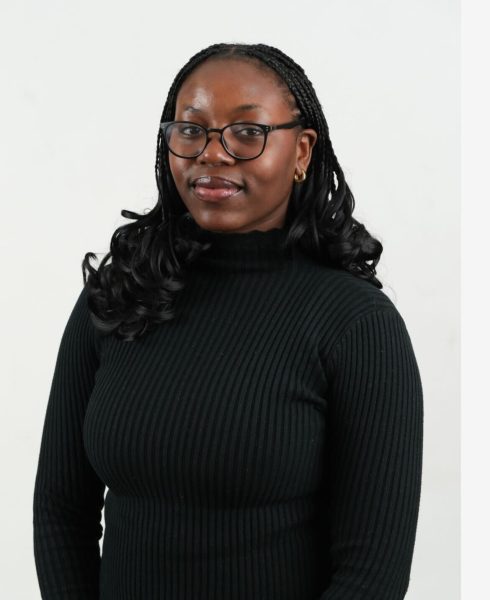


An interview with Hanna Jane Morrell, Senior Student Engagement Coordinator, Full-Time MBA, University of Utah, David Eccles School of Business
HJ, Senior Student Engagement Coordinator for the Full-Time MBA program at the David Eccles School of Business, brought a rare blend of empathy, grit, and logistical savvy to this year’s Alternative Break experience focused on mass incarceration in Oakland, California. Her leadership was shaped not just by her current role, but by a career rooted in supporting nontraditional students—from incarcerated learners to graduate business students navigating life beyond the classroom.
Before joining the Eccles School, HJ worked with Salt Lake Community College’s Prison Education Program, where she witnessed firsthand the systemic barriers incarcerated individuals face in accessing education. Whether students were earning their GEDs or already held degrees, the path forward was rarely straightforward. People often assume these students know how to navigate higher education, she explained. But imagine being incarcerated for over a decade and suddenly needing to use Canvas or a smartphone. She saw how many stakeholders, including legislators, administrators, and federal aid programs had to align just to make education possible behind prison walls. The experience opened her eyes to how deeply education is shaped by access and advocacy
Her resilience and empathy trace back to her own experiences overcoming doubt and limitation. Diagnosed with lupus at 14, HJ spent much of high school homebound and even used a wheelchair in her senior year. Teachers doubted her illness, and she was told she would never graduate college. But after finding the right treatment, she defied expectations, this experience made her realize how crucial it is to have someone advocating for you within the education system.
HJ sees a powerful connection between the students she’s supported in prison education and those in the MBA program. Both groups often come to school from nontraditional paths, and both benefit from someone who can help them navigate unfamiliar systems. Her guiding philosophy is simple: treat people the way you’d want to be treated. That means showing up for students, even when it’s outside the scope of her official role.
Planning a week-long immersive trip like the Alternative Break takes months of coordination. HJ and her site leader, Ta’Mariah, began planning in August, meeting weekly with support from the Bennion Center. They handled everything from educational content to community partnerships, participant logistics, and budgeting. Securing partners proved especially challenging as many organizations declined due to timing or didn’t respond at all, but persistence eventually paid off as the pieces slowly came together about a week before the trip.
Balancing logistics with emotional and educational depth was essential for this Alternative Break. HJ highlighted how the Bennion Center did an excellent job providing training and support to site leaders and staff partners before the trip, ensuring everyone felt prepared for the experience. She praised her site leader, Ta’Mariah, for leading the educational components and emphasized the teamwork they built to make the trip meaningful for students. HJ planned all the logistics for a group of nine students, from driving routes to scheduling and budgeting, which required careful coordination. One of her biggest takeaways was developing trust in teamwork. She shared that she’s comfortable taking charge on projects like this, but during the break she learned to step back, trust her site leader’s leadership, and offer support when it was needed most.
One of the most powerful moments came during the group’s visit to Uncuffed, a nonprofit that works with incarcerated individuals. HJ described how meaningful it was to watch students engage deeply with the stories they heard and to see the realization set in, that incarcerated people are, first and foremost, people. Damon, Uncuffed’s co-founder and CEO, became emotional during the discussion, leaving a lasting impression on everyone. Other partners, like ABO Comix, also left their mark, helping students recognize the resilience and creativity of incarcerated individuals who continue to express themselves through art despite difficult circumstances.
Throughout the trip, HJ noticed students growing in both understanding and empathy. Many had little prior exposure to the realities of mass incarceration, yet they approached each organization with curiosity and sincerity. Their questions were thoughtful, their reflections honest, and the sense of community they built with one another was just as meaningful as the service itself.
HJ manages the emotional weight of leading such a complex topic by grounding herself in perspective, acknowledging how easily anyone’s life could have taken a different path. She often reflects on the role that access, environment, and opportunity play in shaping people’s lives. Her hope is that the students left Oakland with a deeper understanding of the systems that perpetuate incarceration and a renewed sense of empathy. Above all, she wants them to remember that opportunity is a privilege, and that every person, regardless of circumstance, deserves dignity, support, and a chance to grow.